Month: September 2023
-
Sample Subjective Questions on Viruses, Bacteria, and Archaea.
Sample Subjective Questions on Viruses, Bacteria, and Archaea. What are the two components shared by all viruses? All viruses have; a nucleic acid. and a capsid. Viruses are generally considered to be non-living. Should Viroids and prions also be viewed as non-living? Why or why not? Viroids and prions are non-living because, like viruses, they…
-
Enlighten Knowledge Exam; Subjective questions on biotechnology and endogenous industries
What is fermentation? Fermentation is the breakdown of complex organic substances into simple ones by the action of an organic catalyst. State three important applications of fermentation. Brings about the rising of bread In the production of ethanol from sugar In the production of yogurt What is genetic engineering? Genetic engineering involves changing an organism’s…
-
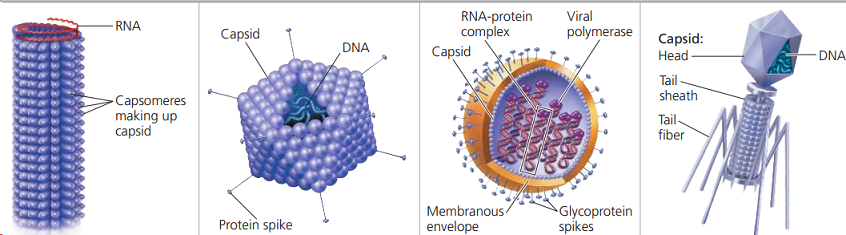
Know more about your enemy; VIRUS
Viral Evolution, Morphology, and Classification Viruses are tiny, acellular entities that can usually only be seen with an electron microscope. Their genomes contain either DNA or RNA (never both) They replicate using the replication proteins of a host cell. Viruses are diverse, infecting archaea, bacteria, fungi, plants, and animals. Viruses consist of a nucleic acid…
-

Suffer no more; Menstrual cramps and fatigue
Suffer no more; Menstrual cramps and fatigue To reduce the intensity of menstrual symptoms, you can change your diet: Less sugar, and slightly more protein. Diuretic foods such as eggplant, cucumbers, and parsley can help diminish water retention. Calcium supplements (1 gram per day) and magnesium (500 milligrams) can help reduce anxiety (always take both).…
-
Do you know, there is plant for each type of stomach problem?
Do you know, there is plant for each type of stomach problem? Aigremoine (Lithospermum ruderale) It is useful when the stomach problem is accompanied by enteritis, diarrhoea, and/or chronic liver infection. It also helps tone a lazy digestive system. And it also helps regularize acidity and soothe ulcers by improving metabolism. The leaves are taken as…
-
The Resurrected Life
What is It All About? Death is very painful because of its ability to bring an end to life. That tells you that death is more powerful than life. That is how death can bring about the cessation of life. But there is another thing that is higher and more powerful than death: resurrection. That…
-
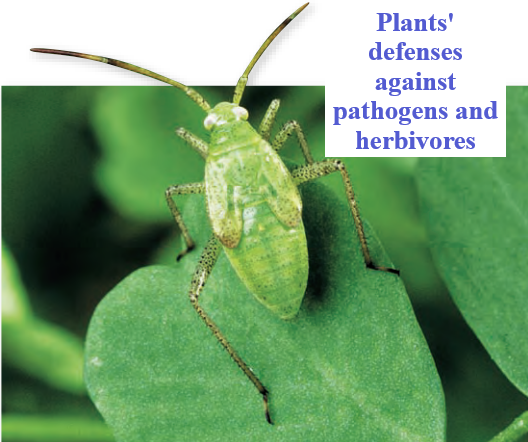
How Plants Defend Themselves Against Pathogens and Herbivores.
Introduction Plants cannot run away from danger. Instead, they have to stand and fight. Like humans and other animals, plants are constantly threatened by an array of disease-causing viruses, bacteria, and parasitic fungi. In addition, plant roots are susceptible to attacks by nematodes and soil-dwelling roundworms. Disease-causing agents are termed pathogens. If plants were not…
-
The Reaction Result From Mismatched Blood Transfusions.
The Reaction Result From Mismatched Blood Transfusions. A person’s blood type is determined by certain antigens found on the red blood cell surface. These antigens are clinically important because they must be matched between donor and recipient during a blood transfusion. ABO groups The protein–sugar complex on the surface of the red blood cells acts…
-
How Pathogens are eliminated from the body and Why the Immune System Reject Foreign Tissues and Organs?
How Pathogens are eliminated from the body and Why the Immune System Reject Foreign Tissues and Organs? Introduction In combination with the leukocytes involved in the innate immune system, the cells of the adaptive immune system are almost always successful in eliminating threats from bacteria, parasites, fungi, and viruses. The many different mechanisms used by…
-
Adaptive Immunity/Specific Defenses/Acquired Immunity.
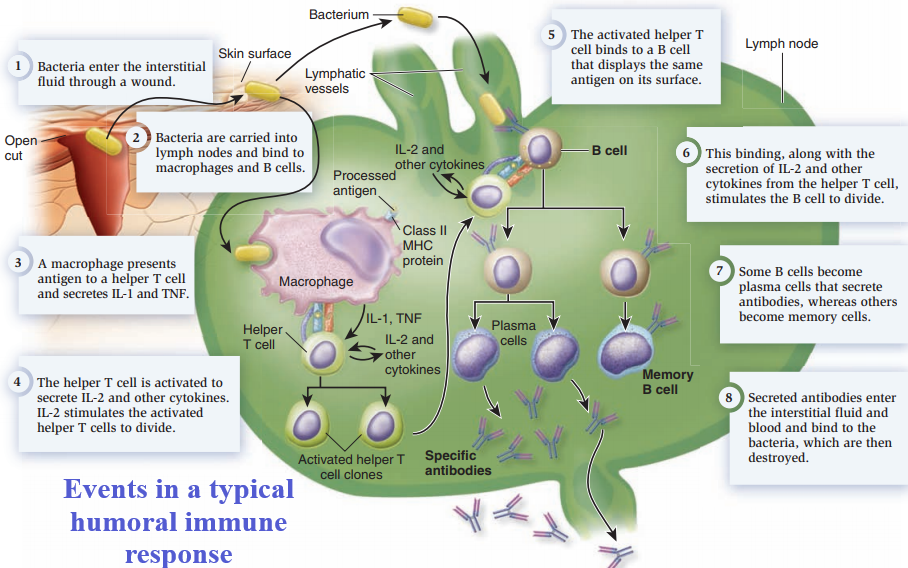
Adaptive Immunity/Specific Defenses/Acquired Immunity. Adaptive immunity Adaptive immunity is a vertebrate-specific defense mechanism that recognizes specific molecules as being foreign and clears those molecules from the body. The foreign molecules recognized may be free, as in the case of toxins, or they may be on the surface of viruses or cells such as pathogenic bacteria,…
-
Enlighten Knowledge Note; The Immune System (Innate Immunity/Nonspecific defenses)
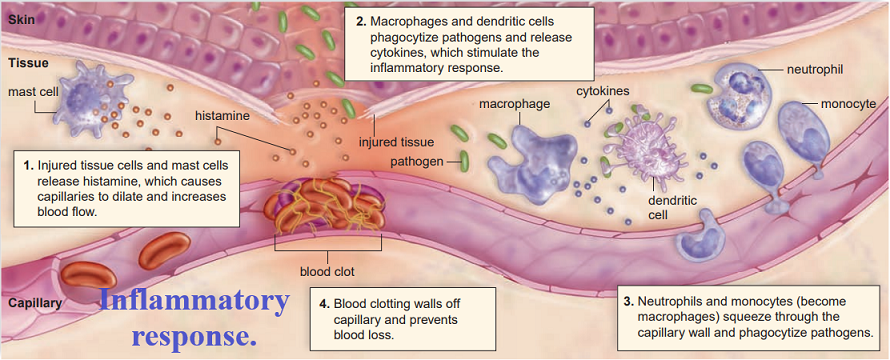
Introduction: The body’s defense makes up the immune system, which enables an animal to avoid or limit many infections. The first lines of defense offered by immune systems help prevent pathogens from gaining entrance to the body. For example; An outer covering, such as skin or a shell, blocks entry by many pathogens. Sealing off…
-
Enlighten Knowledge note; The Lymphatic System.
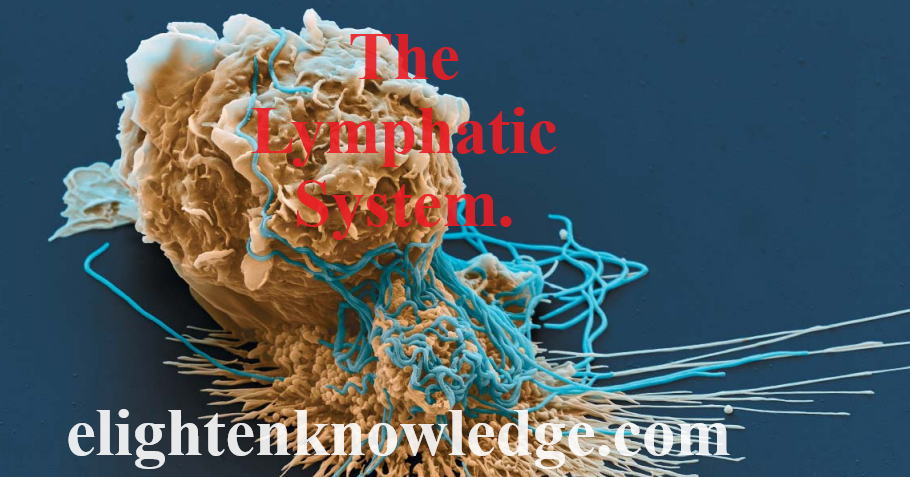
The Lymphatic System. The lymphatic system, which is closely associated with the cardiovascular system, has four main functions that contribute to homeostasis: Lymphatic capillaries absorb excess tissue fluid and return it to the bloodstream. In the small intestines, lymphatic capillaries called lacteals absorb fats in the form of lipoproteins and transport them to the bloodstream.…
-
The Interesting Nature of the Eagle and its Implications on Life.
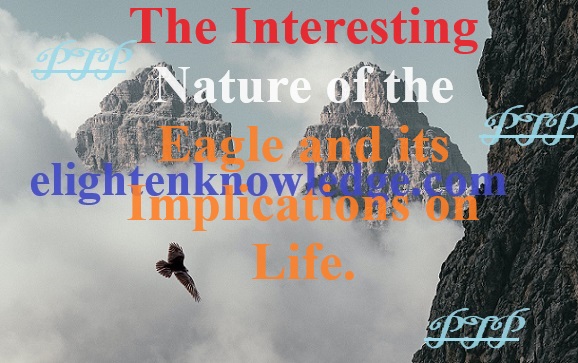
The Eagle Eagles are one of the biggest birds on earth and they are at the top of the food chain. They have powerful legs, talons, and big hooked beaks that help them catch and kill their prey. They also have amazing eyesight and can see up to three kilometers away. Eagles have more cones…
-
Animal Tissues; Types and Their Functions.
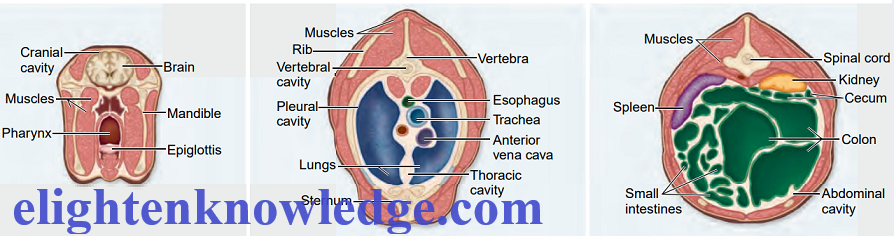
Animal Tissues; Types and Their Functions. Cells form a working animal body through their emergent properties, which arise from successive levels of structural and functional organization. Cells are organized into tissues, groups of cells with a similar appearance and a common function. Different types of tissues are further organized into functional units called organs. (The…
-
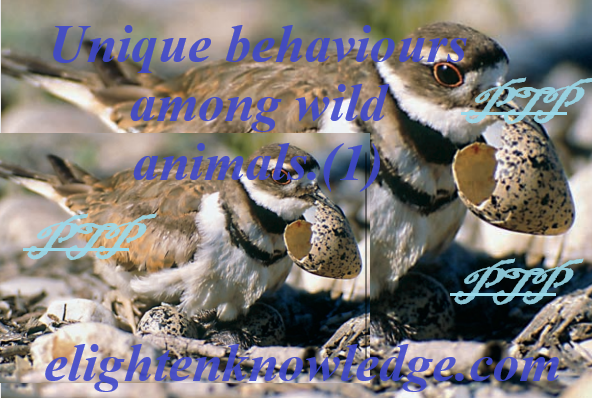
Unique behaviours among wild animals.(1)
Unique behaviours among wild animals. Nest building behavior in lovebirds. Lovebirds are small, green, and pink African parrots that nest in tree hollows. There are several closely related species of lovebirds in the genus Agapornis that build their nests differently. Fischer lovebirds cut large leaves (or in the laboratory, pieces of paper) into long strips…
-

WHY Talent is Not All You Need to Succeed.
WHY Talent is Not All You Need to Succeed. When people achieve great things, others often explain their accomplishments by simply attributing everything to talent. But that is a false and misleading way of looking at success. Talent is often overrated and frequently misunderstood. If talent alone is all we need, then why do you…
-
The impact of Focused, Preparation, and Practice on our success.
The impact of Focused, Preparation, and Practice on our success. Introduction Focus does not come naturally to us, yet it is essential for anyone who wants to make the most of his LIFE. Having plans and goals without focus, preparation, and practice is like being an octopus on roller skates. You can be sure that…
-

The two factors that unconsciously influence our decision making.
The two factors that unconsciously influence our decision making. We make decisions based on The desire of pleasure The avoidance of pain We decide what we do based on these two factors of our emotions and afterwards, back up our emotional decisions with logical reasoning. You can take some time to observe your decisions in…
-
Self-centeredness is the root of all grief and problems. Find out how and why.
Self-centeredness is the root of all grief and problems. Find out how and why. When a loved one dies, we tearfully ask ourselves, How can I go on without them? Giving in to strong emotions, we focus on the death and loss, crying, I won’t ever see them alive on Earth again. We then convince…
-

Enlighten Knowledge; Reasons why you must not seek the approval of others.
Your life does not belong to anyone. It is only in your hands. You are the architect of your own life. Only you are responsible for your happiness. The fact is no one can make you happy, your happiness depends on you but not pupil’s approval. It usually takes a lot of time to find…
Search the Archives

Stay Connected
Categories
Academic Agricultural Biology JHS NEWS NSMQ NURSE Personal Growth and Development SHS Skin Care Social Uncategorized
You May Have Missed