Category: SHS
-
How Kenkey is produced in Ghana (West Africa) and the scientific processes involved.
How Kenkey is produced in Ghana (West Africa) and the scientific processes involved. Kenkey is a popular staple food in Ghana(West Africa). It consists of fermented and cooked maize dough, wrapped in leaves. Kenkey is a staple swallow food similar to sourdough dumplings from the Ga and Fante inhabited regions, but could be found in…
-

A STEP-BY-STEP PROCEDURE TO BUILD A SIMPLE AUDIO AMPLIFIER.
A STEP-BY-STEP PROCEDURE TO BUILD A SIMPLE AUDIO AMPLIFIER. An amplifier is a device that increases the strength (amplitude) of a signal or sound. It takes a weak input signal and produces a stronger output signal, usually with the same waveform but a larger amplitude. Amplifiers are essential in various electronic devices, such as: audio…
-
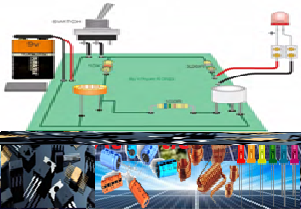
How to Build an LED Circuit and a Light-Dependent Resistor Circuit; Simple Electronics
How to Build an LED Circuit and a Light-Dependent Resistor Circuit. A circuit is a closed loop or pathway through which electric current flows. It consists of components like; resistors, capacitors, inductors, and power sources connected by conductive wires or traces on a circuit board. An LED Circuit To build an LED circuit, the Materials…
-

Solar Panels and Application of Solar Energy in Practical Daily Activities
Solar Panels and Application of Solar Energy in Practical Daily Activities. SOLAR PANELS Solar panels or photovoltaic (PV) cells for electricity consist of solar cells (semiconductor material such as silicon). It is a device that converts heat energy from the solar radiation(sunlight) directly into electricity using the photoelectric effect. The photoelectric effect is the name…
-
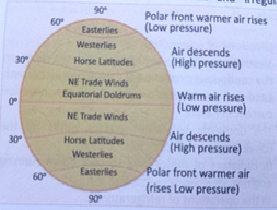
AIR MASSES AND THEIR MOVEMENTS; SCIENCE NOTE SHS
AIR MASSES AND THEIR MOVEMENTS; SCIENCE NOTE SHS Air Masses An air mass is defined as a large body of air that has relatively uniform temperature and humidity characteristics. The regions where air masses form are referred to as air mass source regions. If air remains over a source region long enough, it will acquire…
-

2018 WASSCE BIOLOGY PAPER 1 QUESTIONS AND ANSWERS.
2018 WASSCE BIOLOGY PAPER 1 QUESTIONS AND ANSWERS. QUESTIONS 1. The scientist who introduced binomial nomenclature in the classification of organisms was A. Carolus Linnaeus. B. John Ray. C. Charles Darwin. D. Louis Pasteur. 2. Which of the following statements is true about arthropods? A. Prothorax bears only, wings B. Prothorax bears only legs C.…
-
2019 WASSCE BIOLOGY PAPER 1 QUESTIONS AND ANSWERS.
2019 WASSCE BIOLOGY PAPER 1 QUESTIONS AND ANSWERS. QUESTIONS 1. Which of the following structures will NOT be found in the nucleus of a cell? A. DNA B. Nucleolus C. Lysosome D. Centriole 2. An example of organ level of organization is _______ A. bird B. kidney C. spermatozoon D. xylem 3. A structural similarity…
-
2017 WASSCE BIOLOGY PAPER 1 QUESTIONS AND ANSWERS.
2017 WASSCE BIOLOGY PAPER 1 QUESTIONS AND ANSWERS. QUESTIONS 1. Which of the following groups of animal do not possess a nervous system? A. Porifera B. Cnidaria C. Platyhelminthes D. Nematoda 2. The structural similarities in Paramecium and Euglena are in the A. shape of locomotory organs B. blunt anterior and pointed posterior C. presence…
-
2016 WASSCE BIOLOGY PAPER 1 QUESTIONS AND ANSWERS.
2016 WASSCE BIOLOGY PAPER 1 QUESTIONS AND ANSWERS. QUESTIONS 1. An example of an organism that exists as a colony is A. Spirogyra B. Paramecium C. Euglena D. Volvox 2. Gymnosperms bear naked seeds because they A. ovary B. colourful flowers C. pollen grains D. stigma 3. DNA formation is associated with A. Golgi bodies…
-
2022 WASSCE BIOLOGY 1 OBJECTIVE, QUESTIONS AND ANSWERS.
2022 WASSCE BIOLOGY 1 OBJECTIVE, QUESTIONS AND ANSWERS. QUESTIONS 1. Which of the following organisms is slipper-shaped? A. Chlamydomonas B. Euglena C. Amoeba D. Paramecium The diagram below is a pie chart showing the size of the four main Classes of the Phylum Arthropoda. Study it and answer questions 2 and 3. 2. Which of…
-

2016 WASSCE; BIOLOGY PAPER 2 QUESTIONS AND ANSWERS.
2016 WASSCE; BIOLOGY PAPER 2 QUESTIONS AND ANSWERS. QUESTION 01 (a) (i) List three forms in which living cells exist Forms in which living cells exist Single/free-living Colony/colonial Filamentous/filament Part of a living (ii) Give one example each of the forms listed in 1 (a) Single/free-living Amoeba Chlamydomonas Paramecium Euglena Colony/colonial Eudorina Pandorinallolvox Sponges Filamentous/filament…
-
2024 WASSCE; BIOLOGY PAPER 1 QUESTIONS AND ANSWERS.
2024 WASSCE; BIOLOGY PAPER 1 QUESTIONS AND ANSWERS. QUESTIONS 1. Animals that can vary their body temperature in response to changes in their environments are A. poikilothermic. B. homoiothermic. C. diploblastic. D. triploblastic, The diagram below is an illustration of the drawing of a mammal by a student. Use it to answer question 2. 2.…
-
WASSCE 2015 BIOLOGY PAPER 2 QUESTIONS AND ANSWERS.
WASSCE 2015 BIOLOGY PAPER QUESTIONS AND ANSWERS. QUESTION 01 (a)Explain briefly sexual reproduction in Rhizopus. Answer: Sexual reproduction in Rhizopus – By conjugation. It is usually between two strains of hyphae Known as + and – plus and minus/ opposite mating types The hyphae come in contact And produce small projections of their walls Which…
-
2015 WASSCE BIOLOGY PAPER 1 QUESTIONS AND ANSWERS (QUIZ)
Energy, Enzymes, Biological Reactions, and 2015 WASSCE BIOLOGY PAPER 1 QUESTIONS AND ANSWERS (QUIZ). Life, Energy, and the Laws of Thermodynamics Energy Energy is the capacity to do work. Kinetic energy is the energy of motion. Potential energy is energy stored in an object because of its location or chemical structure. Energy may be readily converted…
-
2014 WASSCE; BIOLOGY PAPER 2 QUESTIONS AND ANSWERS
2014 WASSCE; BIOLOGY PAPER 2 QUESTIONS AND ANSWERS. Question 1 a. (i) List three characteristics of living Answer: Movement/Locomotion, Excretion, Respiration, Reproduction, Irritability/Sensitivity/Response, Growth/Development, Nutrition/Feeding. ii. Explain briefly the characteristics listed in (a)(i) Answer: Movement/Locomotion: Living things change the position of their whole body or parts of their body from one place to another in…
-
Enlighten Biology Note on Using DNA Sequencing.
Enlighten Biology Note on Using DNA Sequencing. The development of DNA profiling and DNA sequencing has led to the development of new areas of bioscience that help us analyze, understand, and make use of all the data generated. Computational biology and bioinformatics People often use the terms computational biology and bioinformatics interchangeably. They describe different…
-
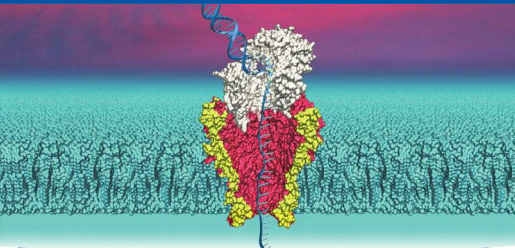
Enlighten Biology Note on Speciation and Artificial Selection.
Enlighten Biology Note on Speciation and Artificial Selection. Speciation Speciation is the formation of new species through the process of evolution. The organisms belonging to the new species will no longer be able to interbreed to produce fertile offspring with organisms belonging to the original species. Several events that happen leading to speciation: Members of…
-
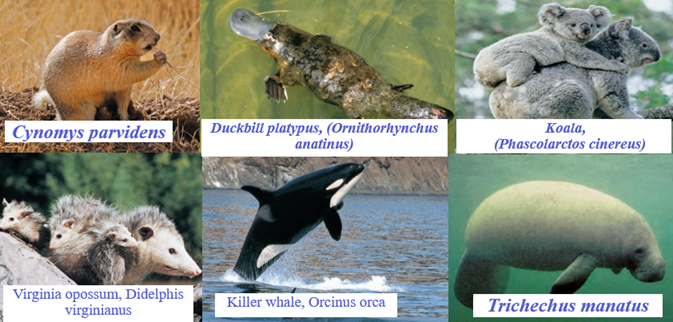
Enlighten Biology note on the Diversity of Mammals
Enlighten Biology note on the Diversity of Mammals MAMMALS Mammals include the largest animal ever to live, the blue whale (130 metric tons). The smallest mammal, the Kitti’s bat (1.5 g) And the fastest land animal is the cheetah (110 km/hr). These characteristics distinguish mammals: Mammals are named for their distinctive mammary glands, which produce…
-
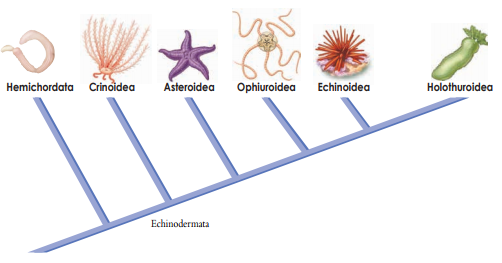
Enlighten Biology Note on Phylum Echinodermata and its Class of Organisms.
Enlighten Biology Note on Phylum Echinodermata and its Class of Organisms. General Characteristics Echinoderms are slow-moving or sessile marine animals. Echinoderms have a coelom. A thin epidermis covers an endoskeleton of hard calcareous plates, and most species are prickly from skeletal bumps and spines. Unique to echinoderms is the water vascular system, a network of…
-
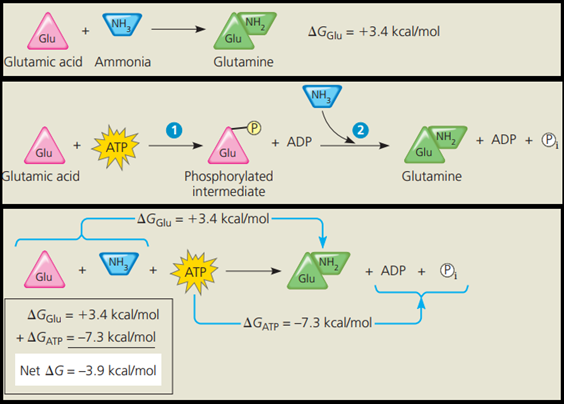
How ATP Provides the Energy that Perform Work.
How ATP Provides the Energy that Perform Work. The structure and hydrolysis of ATP. ATP (adenosine triphosphate) contains the sugar ribose, with the nitrogenous base adenine and a chain of three phosphate groups (the triphosphate group) bonded to it. In addition to its role in energy coupling, ATP is also one of the nucleoside triphosphates…
Search the Archives

Stay Connected
Categories
Academic Agricultural Biology JHS NEWS NSMQ NURSE Personal Growth and Development SHS Skin Care Social Uncategorized
You May Have Missed