Author: Enlighten
-

How to Sleep When It’s Really Hot Outside.
How to Sleep When It’s Really Hot Outside Experts typically recommend setting your bedroom thermostat to around 65°F (a little over 18°C) for optimal sleeping conditions. And if you’ve ever stared at the ceiling for hours on a hot, humid night, you know why: it can be hard to sleep in a warm room. Your body’s core…
-
How to Get Back to Sleep After Waking Up at Night.
How to Get Back to Sleep After Waking Up at Night Waking up throughout the night is normal. Most adults do it between two and six times per night and if you’re a good sleeper, these wakings will be so brief that you likely won’t remember them, says Lynelle Schneeberg, a sleep psychologist and assistant…
-

Are Walking Pads Really Worth It?; Why do you need one?
Are Walking Pads Really Worth It?; Why do you need one? Kenneth Luczko works remotely as an engineer for a tech company which means his fingers dance across his keyboard all day. One might assume that’s the extent of his on-the-clock exercise. But by the time 5 p.m. rolls around, he’s logged at least 15,000…
-
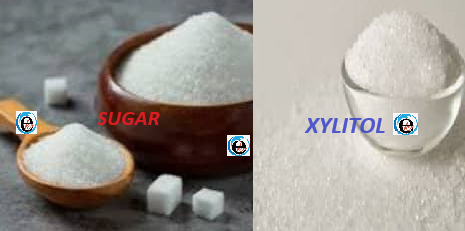
The Popular Sugar Substitute Xylitol Could Have Some Major Heart-Health Risks.
The Popular Sugar Substitute Xylitol Could Have Some Major Heart-Health Risks. Losing weight is one the best ways to lower your risk of heart disease, and cutting back on sugar can contribute to that. But sweeteners that mimic the taste of sugar with fewer or no calories could be increasing, rather than decreasing, the risk…
-

Effects of Imbalance Serotonin and Dopamine on an Individual.
Effects of Imbalance Serotonin and Dopamine on an Individual. What is Serotonin? Serotonin is a neurotransmitter that is often associated with mood regulation, but it is also involved in appetite and sleep regulation It also helps in blood clotting and bone health. It is produced in the brain and intestines. Low levels of serotonin may…
-
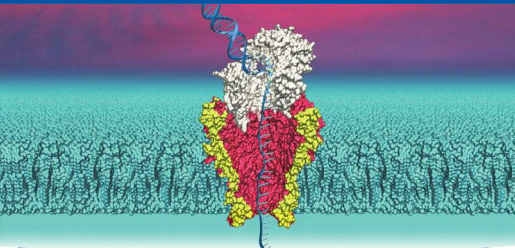
Conditions that Can be Successfully Improved or Treated with Sufficient Iodine Consumption.
Conditions that Can be Successfully Improved or Treated with Sufficient Iodine Consumption. The therapeutic actions of iodine include antibacterial, antiviral, antiparasitic, and anticancer effects, elevating pH values, and serving as a mucolytic agent (breaking up mucus in the body). Conditions that can be successfully improved or treated with iodine are: ADD/ADHD atherosclerosis brain fog breast…
-

Traits of Individuals with Iodine Deficiency and Some Possible Causes
Traits of Individuals with Iodine Deficiency and Some Possible Causes Iodine deficiency is a broadly rampant issue and one that can impact every aspect of endocrine, cognitive, mood, and immune functions. It is easily the most underrecognized and widely impacting trace mineral deficiency problem today, an issue recently brought to light by two independent medical…
-

Essential Nutrients to Support Individuals with Depression and Anxiety.
Essential Nutrients to Support Individuals with Depression and Anxiety Depression is not a Prozac deficiency. Anxiety is not a deficiency of any pharmaceutical anxiolytic agent. Personal issues certainly cloud the equation, but psychotherapy is ill-suited to get at the physiological underpinnings of depression or anxiety. Both disorders are commonly the product of a vicious cycle…
-

Disorders Commonly Associated with Individuals with Magnesium Deficiency.
Disorders Commonly Associated with Individuals with Magnesium Deficiency. Magnesium is one of the most overlooked and among the most depleted minerals in the modern diet. High-carbohydrate diets readily deplete it, and its deficiency can lead to high blood pressure, anxiety disorders, extreme and chronic muscle tension, impaired liver and brain function, cancer, and heart disease.…
-
Essential steps to reclaiming or improving your memory and restoring the health of your brain.
Essential steps to reclaiming or improving your memory and restoring the health of your brain. Among the most critical faculties allowing us to function effectively day to day is basic memory. Memory problems are one of the most common complaints and one of the most challenging issues people struggle with. Memory loss is often the…
-

Some Essential Dietary Considerations for Healthy Living
Essential Dietary Considerations for Healthy Living Supplementation with fish oils in small quantities of only 1 to 2 percent of caloric intake not only enhances the functioning of the brain and nervous system as well as the cardiovascular and immune systems However, it also tends to help eliminate unhealthy cravings for sweets once adequate levels…
-
The Biology of Belief; What Could Possibly Be More Important?
The Biology of Belief; What Could Possibly Be More Important? There is a great deal of attention being paid today to the new age concept that belief drives our reality, our biology, and our health. There is some real scientific validity to this. However, forcing oneself to “think positive thoughts” while simultaneously suppressing or sublimating…
-
The Mind and The Body; You Simply Cannot Separate the Two.
The Mind and The Body; You Simply Cannot Separate the Two. The myth, of course, is that there is a real distinction between body and mind. There is, in fact, no fundamental separation between mind and body. What happens to one happens to the other. They are both part of the same functioning or dysfunctioning…
-
How Important Is Fat to the Health of the Brain?
How Important Is Fat to the Health of the Brain? The brain is made up of more than 50 percent fat—up to 70–80 percent of its dry weight. The body’s highest concentrations of omega-3 fatty acids are in the brain Up to one-quarter of the human brain’s fatty acid stores are DHA, a component of…
-

How Important Is Fat to the Brain Cells?
How Important Is Fat to the Brain Cells? The brain is the single most expensive organ in the body concerning metabolic needs. It occupies only 5 percent of our total mass but uses at least 20–30 percent of our body’s energy supply to meet its considerable demands. Many people assume that the brain needs glucose…
-

How Much Natural Fat Do I Need, Anyway?
How Much Natural Fat Do I Need, Anyway? Recent advances in leptin and life-extension research point to a potentially important value in consuming a relatively higher percentage of fat in our diets. The implications of this research are quite exciting and show how the very thing we thought was our worst enemy may well, in…
-
The Biological Effects of Saturated Fatty Acids Compared with Trans Fatty Acids.
The Biological Effects of Saturated Fatty Acids Compared with Trans Fatty Acids Clearly, hydrogenated and partially hydrogenated fats and oils have no place in the human diet. Obvious sources such as margarine, “spreads,” vegetable shortening, and products clearly labeled as containing hydrogenated or partially hydrogenated oils are easy enough to identify and avoid. Few people…
-
Why You Should Avoid Trans Fats at All Costs.
Why You Should Avoid Trans Fats at All Cost. Just what are trans fats, and why should we need to go out of our way to avoid them, anyway? Trans fats are a form of artificially saturated, hydrogenated, or partially hydrogenated fat typically made from vegetable oil (canola and soy oils are commonly used, though…
-
What Is Omega-3 Fatty Acid, and What Makes It So Important?
What Is Omega-3 Fatty Acid, and What Makes It So Important? Deep within the cellular structure (chloroplasts) of plankton, green and leafy plants such as grass, and other sources such as walnuts and flaxseeds lie ALA, the “parent” form of a class of essential fatty acids known as omega-3 fatty acids. The term essential here…
-
Why You Need to Avoid High Fructose Corn Syrup (Food)
Why You Need to Avoid High Fructose Corn Syrup (Food) Today, the number one source of dietary calories in most countries is a corn-based industrial sweetener known as high fructose corn syrup (HFCS). It is an ingredient used to sweeten almost everything, including sodas, cookies, soups, yogurt, salad dressing, bread, cereal, iced tea, “health bars,”…
Search the Archives

Stay Connected
Categories
Academic Agricultural Biology JHS NEWS NSMQ NURSE Personal Growth and Development SHS Skin Care Social Uncategorized
You May Have Missed