Category: Academic
-

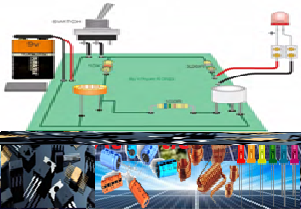
How smartphones work (sending, receiving messages and calls).
When we say phone today a little rectangular object that can connect to the internet and search for information, and contain messaging apps and social networks, comes to mind. But if you ever saw a telephone from the 1970s, you will wonder how it should be used. Before the telephone, there was the telegraph, a…
-

The Basics of Analogue and Digital System.
The Basics of Analogue and Digital System. Engineers divide measurements into two kinds analogue and digital. Analogue things come in continuous measures, such as time, space, temperature, or speed. When you measure them, you can express the measurements in decimals. For instance, your body’s normal temperature is 37.5°C, acceleration due to the Earth’s gravity is…
-
The fundamentals of quality assurance; everything you need to know.
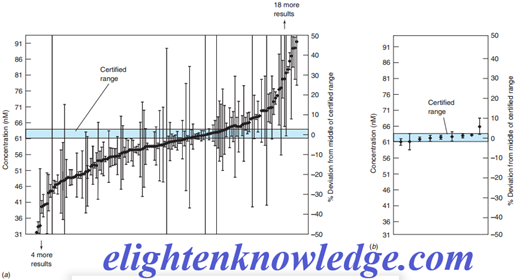
Quality assurance is what we do to get the right answer for our purpose. The answer should have sufficient accuracy and precision to support subsequent decisions. There is no point in spending extra money to obtain a more accurate or more precise answer if it is not necessary. What are the basics of quality assurance?…
-
Method Validation in Quality Assurance
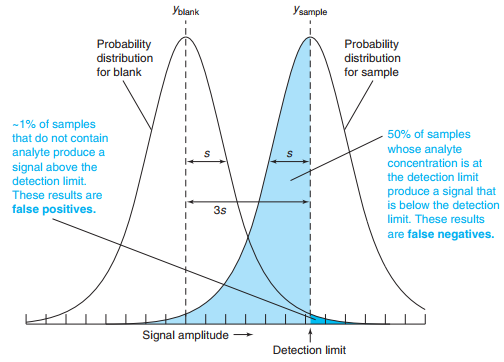
Method validation is the process of proving that an analytical method is acceptable for its intended purpose. In pharmaceutical chemistry, method validation requirements for regulatory submission include studies of method specificity, linearity, accuracy, precision, range, limit of detection, limit of quantitation, and robustness. The fundamentals of quality assurance Accuracy Accuracy is “nearness to the truth.”…
-
How to Store/preserve Microorganisms Such as Bacteria, Fungi, Protozoans and Virus.
How to Store/preserve Microorganisms Such as Bacteria, Fungi, Protozoans and Virus. These are some simple and broadly applied methods are necessary to maintain organisms (bacteria, protozoa, fungi, and viruses) for short and long-term recovery. Short-Term Preservation Methods Direct Transfer to Subculture. The simplest method for maintaining the short-term viability of microorganisms, most often used for…
-
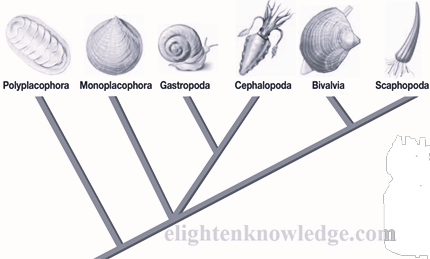
PHYLUM MOLLUSCA; General Characteristics and Classes.
PHYLUM MOLLUSCA; General Characteristics and Classes. Introduction Mollusca is the largest lophotrochozoan phylum and one of the largest and most diverse of all phyla. Molluscs range in size from microscopic organisms to the largest of invertebrates. Most molluscs are marine, but some are freshwater, and a few are terrestrial. They occupy a wide variety of…
-

CHEMICAL ENGINEERING AND ITS IMPACT ON HUMAN LIFE.
What is Chemical or Process Engineering? Chemical or Process Engineering is a branch of engineering which applies the knowledge of chemistry, mathematics, physics, biology, and other scopes of science to develop economical technologies and industrial processes that can transform raw materials into useful products and energy to enhance the quality of human life (College Grad,…
-
How to Become a Geoscientists.
What is Geoscience? We live on the planet Earth which resides in a Solar System made up of other planets and stars. The Earth provides for all our needs and sustains life. As we live our daily lives, develop, evolve, innovate, manufacture and construct, our activities impact the Earth. Humans and other living organisms depend…
-
2023 WASSCE BIOLOGY PAPER 2 QUESTIONS AND ANSWERS.
2023 WASSCE BIOLOGY PAPER 2 QUESTIONS AND ANSWERS. 1. a. Explain briefly the following terms i. Taxonomy Taxonomy is a branch of biology, which involves a systemic classification of living things, into groups based on their similarities, forms, characteristics, genetics, and cellular organisation. ii. Binomial nomenclature Binomial nomenclature I the scientific method of naming organism,…
-
99 BIOLOGY OBJECTIVE QUESTIONS ON CONTROL AND COORDINATION WITH ANSWERS.
1. To focus on a distant object, the ciliary muscle of the eye A. relaxes and the eye lens gets thicker B. contracts and the eye lens gets thinner C. relaxes and the eye lens gets thinner D. contracts and the eye lens gets thicker 2. The ability of the eye to bring about the…
-

Insomnia, What is it about?
Insomnia, What is it about? Insomnia is one of the most persistent and depressing symptoms of psychasthenia. Patients suffer through sleepless nights, followed by bad days, and are so tired they don’t have the courage or will to react to their constant fatigue gives them an excuse to succumb to their illness. They place so…
-
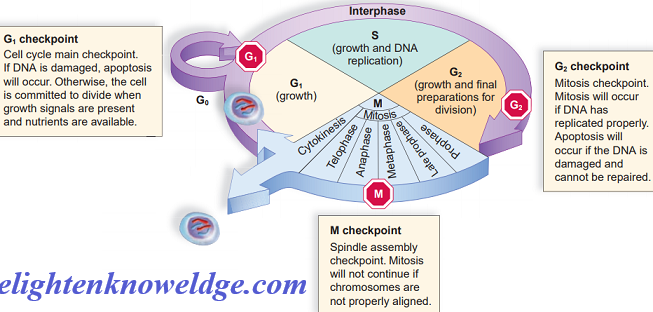
Multiple Choice Questions on Protein Synthesis (Cell Biology II).
Questions 1. Mitosis consists of four distinct stages which of the following sequences represent the correct order in which it occurs? I – Metaphase II – Telophase III – Prophase IV – Anaphase A. I, II, III and IV B. III, I, II and IV C. IV, I, II and III D. III, I, IV…
-
Multiple Choice Questions on Humans Ecology and Health with Answers. (2)
Multiple Choice Questions on Humans Ecology and Health with Answers. (1) Questions 1. Renewable resources comprise A. organisms that are constantly reproducing B. plants and animals in the forest only C. plants and animals that can reproduce sexually D. all animals that can reproduce. 2. Renewable resources are formed by A. animals that reproduce sexually…
-

Multiple Choice Questions on Humans Ecology and Health with Answers. (1)
Questions 1. Which of the following roles is not performed by a government agency responsible for forest maintenance? A. Regulating mining activities in the forest. B. Tracking the movement of timber, wood and wildlife. C. Creating, protecting and managing forest reserves. D. Regulating the harvest of timber and poaching. 2. Harmful organisms spread easily because…
-
Biological Practical section Five (5). On Tadpole
Specimen: TADPOLE. State four observable features on the ventral part of the tadpole. Remains of sucker Presence of limb bud Presence of tail fin Also, tail muscle is present. Anus Long coiled intestine. Give the diet of the specimen with reasons The diet of the specimen is Vegetation (phytoplankton)/pond weeds. Reasons Presence of horny jaws…
-
How Organisms Detect and React to Changes in Temperature and Pain
How Organisms Detect and React to Changes in Temperature and Pain How organisms react and detect temperature changes. Thermoreceptors are regarded as nonspecialized sensory receptors (free nerve endings) that respond to changes in temperature. There are two types, warm and cold receptors. Invertebrates such as fleas and mosquitoes employ thermoreceptors to find their endothermic (“warm-blooded”)…
-
The Science and Principle of Taste, Smell, and pH
The Science and Principle of Taste, Smell, and pH Some sensory cells, called chemoreceptors, contain membrane proteins that can bind to particular chemicals or ligands in the extracellular fluid. In response to this chemical interaction, the membrane of the sensory neuron becomes depolarized and produces action potentials. Chemoreceptors are used in the senses of taste…
-
Memory and Learning. Mechanism of Alzheimer’s Disease Still a Mystery?
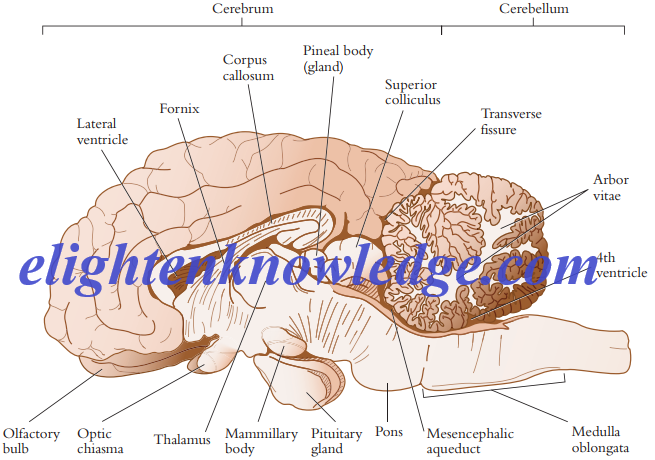
Memory and Learning. Mechanism of Alzheimer’s Disease Still a Mystery? Memory and Learning One of the great mysteries of the brain is the basis of memory and learning. There is no one part of the brain in which all aspects of memory appear to reside. Specific cortical sites cannot be identified for particular memories because…
-
Mechanism of Sleep and Language and Spatial Recognition.
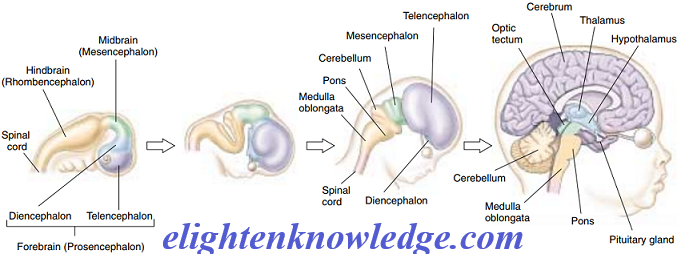
Mechanism of Sleep and Language and Spatial Recognition. Arousal and Sleep. The brain stem contains a diffuse collection of neurons referred to as the reticular formation. One part of this formation, the reticular activating system, controls consciousness and alertness. All of the sensory pathways feed into this system, which monitors the information coming into the…
-
Possible Essay/Subjective Questions on Kingdom Fungi
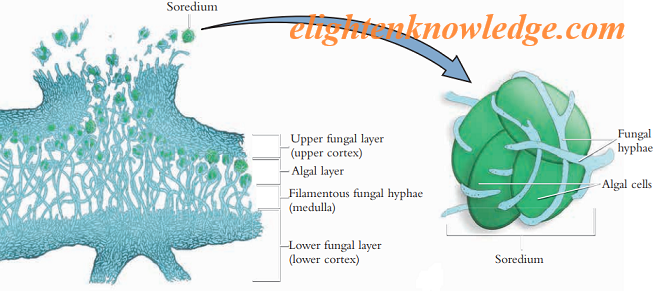
Possible Essay/Subjective Questions on Kingdom Fungi How do animals and fungi differ concerning heterotrophy? Animals are heterotrophs by ingestion, and fungi are heterotrophs by absorption. How are fungal cell walls different from plant cell walls? Fungal cell walls contain chitin, and those of plants contain cellulose. Describe the function of a fungal spore. A fungal…
Search the Archives

Stay Connected
Categories
Academic Agricultural Biology JHS NEWS NSMQ NURSE Personal Growth and Development SHS Skin Care Social Uncategorized
You May Have Missed