Year: 2024
-
WHEN GOOD STRESS TURNS BAD
WHEN GOOD STRESS TURNS BAD. When under any type of stress be it the stress from work or a workout your body is thrust out of balance. And the collective steps it must take to recover is known as its allostatic load. But pile on the stress and suddenly your load becomes overload. How do…
-

TAKE A NATURE PILL TO BEAT STRESS
TAKE A NATURE PILL TO BEAT STRESS Think you’re busy? Office workers routinely work long hours. Stress runs rampant, and there’s even a saying that people are being worked to death. A preventable tragedy that claims a small but growing number of lives every year. Perhaps for this reason (and the fact that 93 percent…
-
Why do we have sweet tooth?
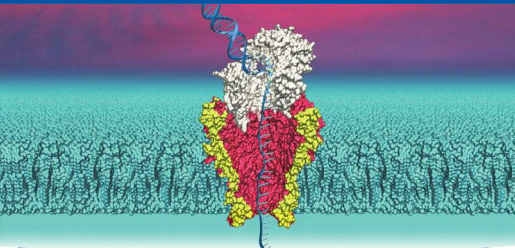
Looking at your tongue closely in the mirror you will see tiny bumps scattered on the surface. Inside these bumps are small structures called taste buds and inside the taste buds are cells called taste receptors. The taste receptors detect the presence of certain molecules and send messages to your brain about them. The sensed…
-

Basic principles to repair the faulty and specious premises on which we base our lives and our identity.
Every habit and faculty is preserved and increased by its corresponding actions: The habit of walking makes us better walkers, regular running makes us better runners. It is the same regarding matters of the soul. Whenever you are angry, you increase your anger; you have increased a habit and added fuel to a fire. If…
-

Developing Sensitive Communication Skill or Ability
Developing Sensitive Communication Skill or Ability Communication is the art of presenting our thoughts to others. Communication is not only about what we say but how we behave, which is portrayed through our body language. Body language is non-verbal; it’s the unspoken gestures that reveal our true emotions and intentions. You may also want to…
-
Understanding and Dealing with Toxic Behaviours in Our Everyday Life
Understanding and Dealing with Toxic Behaviours in Our Everyday Life Sensory inputs such as the sights of people, places, and things; smells, fragrances, and aromas; or sounds, music, and songs can govern how we feel. These are all things that can transport us to another part of the world as they connect with the strong…
-

Understanding and Managing Grief
Understanding and Managing Grief Grief Have you ever wondered how much pleasure our nails can give us? No one in the history of the human race would have thought about that question unless they had heard it before. We do not overly think about our nails. However, how much potential do the nails have to…
-

How to Deal with the Fear of Missing Out
Many of us experience it daily I was not invited to a wedding, birthday, celebration, or holiday, and even did not get to watch a television show I liked. The list can go on Fear of missing out is defined as a pervasive apprehension that others might be having a rewarding experience from which one…
-

Principles that Will Enable you to Harness your Power of Influence
Human beings are a touchy lot; one wrong move, and you’ll lose all ability to convince people to get on your team. You must make strategic moves that are informed by the necessary underlying principles. Here are some of the principles you need to consider; First, you need to understand the principle of consistency Consistency…
-

Habits or Factors that Make it Easier for Others to Manipulate
Habits or Factors that Make it Easier for Others to Manipulate Besides knowing how to identify a predator, it also helps to understand what makes a person more vulnerable to manipulations. Simply put, there are sitting monkeys that are closer to the line of fire than others. Take note of the following habits and avoid…
-

What is Machiavellianism? The Traits of People with High Mach.
What is Machiavellianism? The Traits of People with High Mach. Niccolo Machiavelli, a man known as the father of modern political science, was an Italian of the Renaissance period who wore many hats. Machiavelli was a politician, historian, humanist, poet, author, and diplomat, among others. You may also want read; Understanding the techniques in hypnotizing…
-

Understanding How to Hypnotize Someone to Act According to Your Orders.
Understanding How to Hypnotize Someone to Act According to Your Orders. What is the first thing that comes to mind when you hear the term hypnosis? For many people, the answer is this: a Hollywood film with an executed scene complete with a hypnotist and his mythical swinging watch. Across the hypnotist is the poor…
-

Feeling, Dealing, and Healing Our Emotions
Sometimes, to help people understand your point, you need to get down from the stage. It’s not as if people could not see you on this huge stage. You wear bright clothes daily, which signifies you are the leader. It’s easy to spot you from the other side of a city, let alone an auditorium.…
-

Who is a narcissist? Traits of a narcissist that you must not miss.
Who is a narcissist? Traits of a narcissist that you must not miss. Narcissism is the excessive and obsessive self-admiration that a person has towards themselves and their physical appearance. A narcissist is often easy to spot because their actions and beliefs easily give them away. Wondering whether you have a narcissist in your life?…
-

How to Identify a Human Predator in Your Life
How to Identify a Human Predator in Your Life Your colleague at work might be someone that you really get along with or someone who pretends to get along with you for their own benefit. How do you know the difference? Entitlement is the order of the day Have you ever come across someone who…
-
Using Immobilised Enzymes
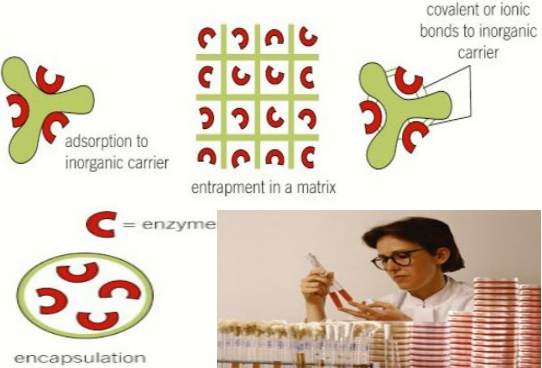
Enzymes, mainly from microorganisms, have been used indirectly for thousands of years in biotechnologies including brewing, baking, and making cheese and yoghurt. Many biotechnological processes still use whole microorganisms as their enzyme source. More recently they are also being used in isolation. Isolated enzymes Using isolated enzymes instead of whole organisms has some clear advantages.…
-

Culturing microorganisms in the laboratory and on an industrial scale.
Culturing microorganisms in the laboratory To investigate microorganisms for the medical diagnosis of disease or scientific experiments you need to culture them. This often involves growing large enough numbers of microorganisms for us to see them clearly with the naked eye. Whenever microorganisms are cultured in the laboratory the correct health and safety procedures must…
-
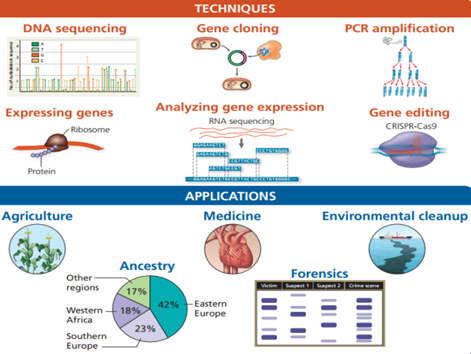
Microorganisms, Medicines, and Bioremediation.
Since the discovery of penicillin in the 1920s, biotechnology has played a key role in the development of medicines. Producing penicillin The first effective antibiotic was penicillin, produced by a mould called Penicillium notatum. The yield of penicillin from this mould was very small. Commercial production of the drug in the quantities needed to treat…
-

Microorganisms and Biotechnology
The earliest recorded use of microorganisms by people was around 6000 BC when the Sumerians and Babylonians were using yeast to make beer. By 4000 BC the Egyptians were using yeast to make their bread rise. These are all examples of the development and use of biotechnology over several millennia. Defining biotechnology Biotechnology involves applying…
-
Understanding Cloning in Animals
Cloning is a natural part of the reproductive cycle in many plants. Perhaps surprisingly, it is not uncommon in many animal species and even occurs in human beings. Natural cloning in animal Natural cloning is common in invertebrate animals. Although it is less common in vertebrates, it still occurs in the form of twinning. Cloning…
Search the Archives

Stay Connected
Categories
Academic Agricultural Biology JHS NEWS NSMQ NURSE Personal Growth and Development SHS Skin Care Social Uncategorized
You May Have Missed