Month: January 2024
-

Who is a narcissist? Traits of a narcissist that you must not miss.
Who is a narcissist? Traits of a narcissist that you must not miss. Narcissism is the excessive and obsessive self-admiration that a person has towards themselves and their physical appearance. A narcissist is often easy to spot because their actions and beliefs easily give them away. Wondering whether you have a narcissist in your life?…
-

How to Identify a Human Predator in Your Life
How to Identify a Human Predator in Your Life Your colleague at work might be someone that you really get along with or someone who pretends to get along with you for their own benefit. How do you know the difference? Entitlement is the order of the day Have you ever come across someone who…
-
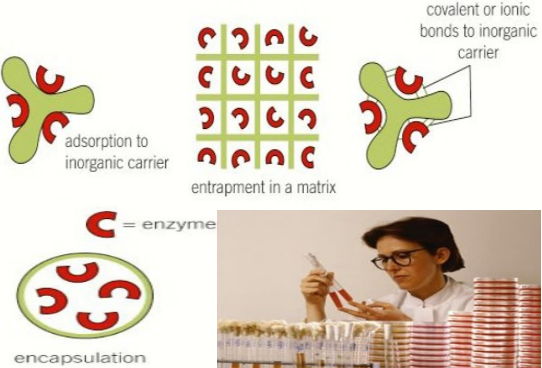
Using Immobilised Enzymes
Enzymes, mainly from microorganisms, have been used indirectly for thousands of years in biotechnologies including brewing, baking, and making cheese and yoghurt. Many biotechnological processes still use whole microorganisms as their enzyme source. More recently they are also being used in isolation. Isolated enzymes Using isolated enzymes instead of whole organisms has some clear advantages.…
-

Culturing microorganisms in the laboratory and on an industrial scale.
Culturing microorganisms in the laboratory To investigate microorganisms for the medical diagnosis of disease or scientific experiments you need to culture them. This often involves growing large enough numbers of microorganisms for us to see them clearly with the naked eye. Whenever microorganisms are cultured in the laboratory the correct health and safety procedures must…
-
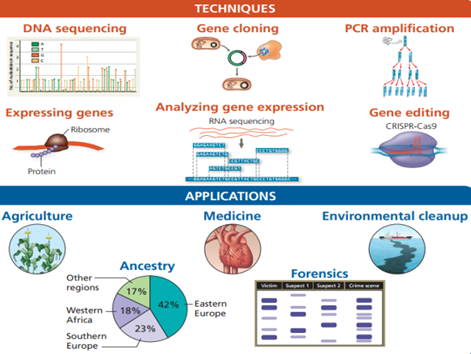
Microorganisms, Medicines, and Bioremediation.
Since the discovery of penicillin in the 1920s, biotechnology has played a key role in the development of medicines. Producing penicillin The first effective antibiotic was penicillin, produced by a mould called Penicillium notatum. The yield of penicillin from this mould was very small. Commercial production of the drug in the quantities needed to treat…
-

Microorganisms and Biotechnology
The earliest recorded use of microorganisms by people was around 6000 BC when the Sumerians and Babylonians were using yeast to make beer. By 4000 BC the Egyptians were using yeast to make their bread rise. These are all examples of the development and use of biotechnology over several millennia. Defining biotechnology Biotechnology involves applying…
-
Understanding Cloning in Animals
Cloning is a natural part of the reproductive cycle in many plants. Perhaps surprisingly, it is not uncommon in many animal species and even occurs in human beings. Natural cloning in animal Natural cloning is common in invertebrate animals. Although it is less common in vertebrates, it still occurs in the form of twinning. Cloning…
-

Understanding Natural and Artificial Cloning in Plants
Asexual reproduction is a form of cloning and it results in offspring produced by mitosis known as clones. Clones are usually genetically identical to both the parent organism and to each other. Natural cloning Vegetative propagation, or natural cloning, occurs in many species of flowering plants. A structure forms which develops into a fully differentiated…
-
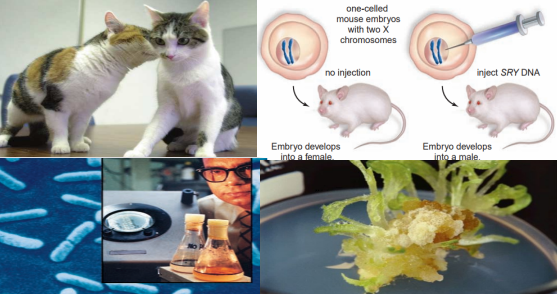
Genetic Engineering, Gene Technology and Ethics
DNA sequencing and proteomics provide us with a detailed understanding of an organism’s genetic instructions. Advances in these technologies and molecular biotechnology techniques mean it is now possible to manipulate an organism’s genome to achieve a desired outcome. This manipulation of the genome is called genetic engineering. The basic principles of genetic engineering involve isolating…
-
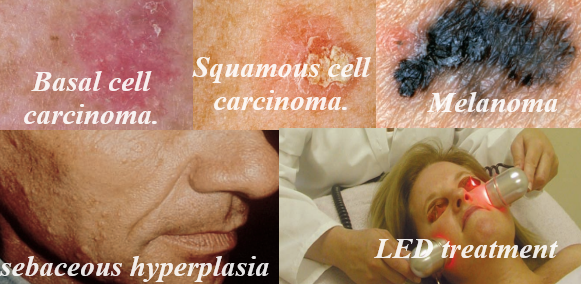
Skin Cancers and Other Sun-Related Skin Growths
Skin Cancers and Other Sun-Related Skin Growths Skin cancer Skin cancer is caused by the damage to the DNA that we have been discussing. The cells begin dividing unevenly and rapidly, but the genetic material in the DNA is damaged by the sun. This rapid dividing of the cells may take the form of small…
-

Skin Aging Causes, Prevention and Management
Skin Aging Causes, Prevention and Management What are the causes of skin aging? Here we discuss several factors that influence aging. Gravity is certainly a factor. The gravity of the earth constantly pulls on our bodies, including the facial skin. This gravity is one factor that causes skin and muscle to sag. Lack of oestrogen…
-

The Modern Science of Old Age Skin Treatment
The Modern Science of Old Age Skin Treatment Only in the past few years have researchers understood more about photo damage and discovered methods of effective treatment for photoaging. Although prevention and daily use of broad-spectrum sunscreens are still the best treatment, aestheticians now have at their disposal new and promising techniques and ingredients to…
-

The Basic Treatment Techniques of Sun-Damaged Skin
The Basic Treatment Techniques of Sun-Damaged Skin The Basics of Treating Sun-Damaged Skin Sun exposure must be carefully avoided, especially during the hours between 10 a.m. and 3 p.m. An SPF 15 (or higher) broad-spectrum sunscreen should be worn on a daily basis, and incorporated into a day cream or fluid. An 8 to 10…
-
Symptom And Treatment Guide for Specific Photoaging Conditions
Symptom And Treatment Guide for Specific Photoaging Conditions The following is a quick reference guide to examples of which treatments and products are more appropriate for specific photoaging symptoms. Each client’s skin, of course, is different and may require a combination of the products and treatment modalities. Wrinkles, Rough Textures Alpha hydroxy acid in the…
-
Common Reactions, Rashes, And Irritations
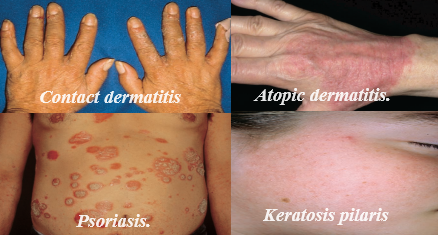
Sensitive Skin, Allergies, and Irritants, we discuss common allergies that the aesthetician sees routinely. Dermatitis means inflammation of the skin. It is a descriptive term used to describe many different types of skin inflammation and irritation. Dermatitis is an irritation rather than a disease. It is generally not caused by pathological organisms, such as infections…
Search the Archives

Stay Connected
Categories
Academic Agricultural Biology JHS NEWS NSMQ NURSE Personal Growth and Development SHS Skin Care Social Uncategorized
You May Have Missed